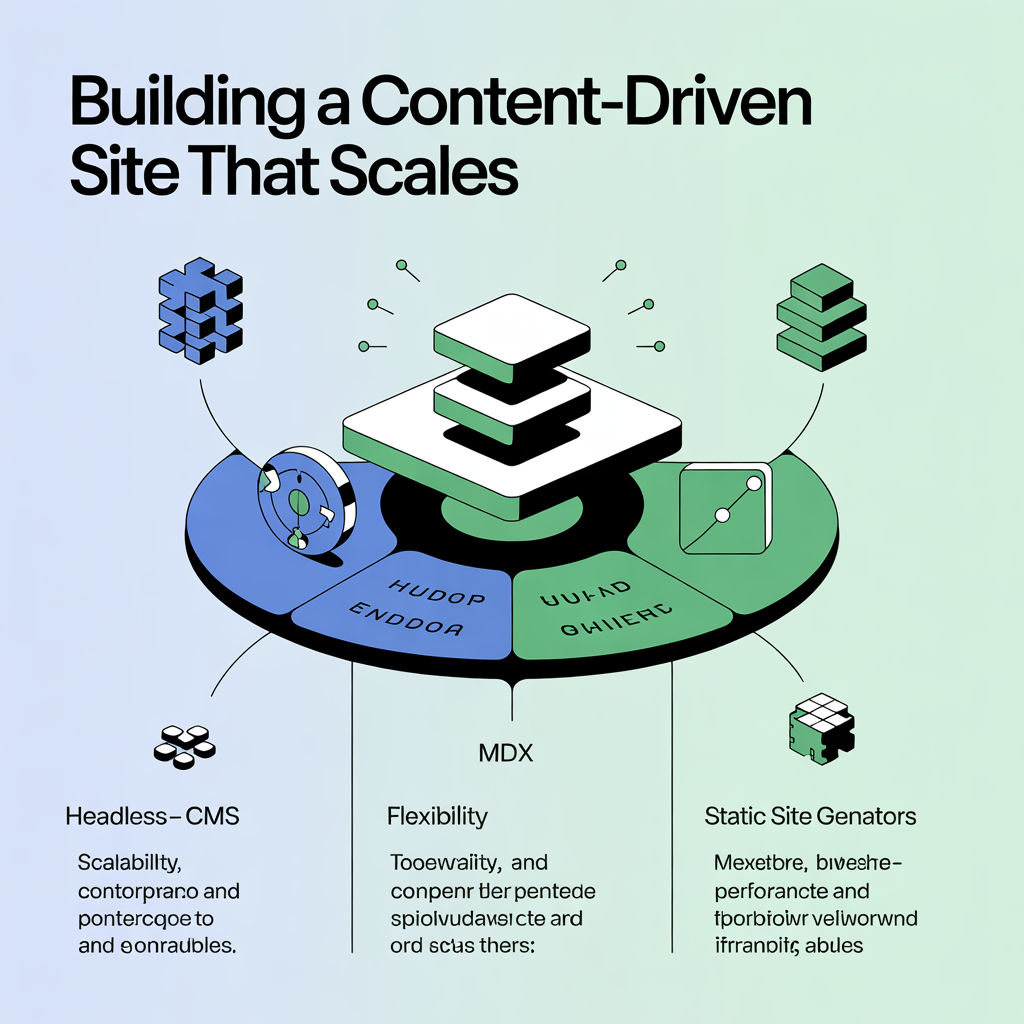
Your decision is mostly about workflow
All three approaches can be fast and SEO-friendly. The real question is: who publishes content, how often, and how structured it is.
Option A: Static (pure static generator)
Best when:
- Content changes infrequently
- Few authors
- You want maximum simplicity
Tradeoffs:
- Rebuilds needed for updates
- Less flexible previews
Option B: MDX (content in repo)
Best when:
- Developers are the authors
- You want content and components together
- You need strong version control
Tradeoffs:
- Non-technical authors may struggle
- Editorial workflows require tooling
Option C: Headless CMS
Best when:
- Many authors/editors
- Frequent publishing
- Structured content needed (categories, products, landing pages)
Tradeoffs:
- Ongoing cost (often USD-based tiers)
- More integration complexity (previews, webhooks, auth)
Practical decision table
| Need | Best Fit |
|---|
| Non-technical editors | Headless CMS |
| Developer-written technical docs | MDX |
| Minimal maintenance | Static |
| Complex content models (e.g., landing page builder) | Headless CMS |
| Tight control + Git review | MDX |
Scaling tips that apply to all
- Define content types and metadata early (title, description, canonical, OG image).
- Build a consistent “page template system” so new pages don’t become one-offs.
- Add preview environments and content staging before you “need” them.
Checklist
- Editorial workflow defined (draft → review → publish)
- SEO metadata standardized
- Preview support planned
- Content model documented